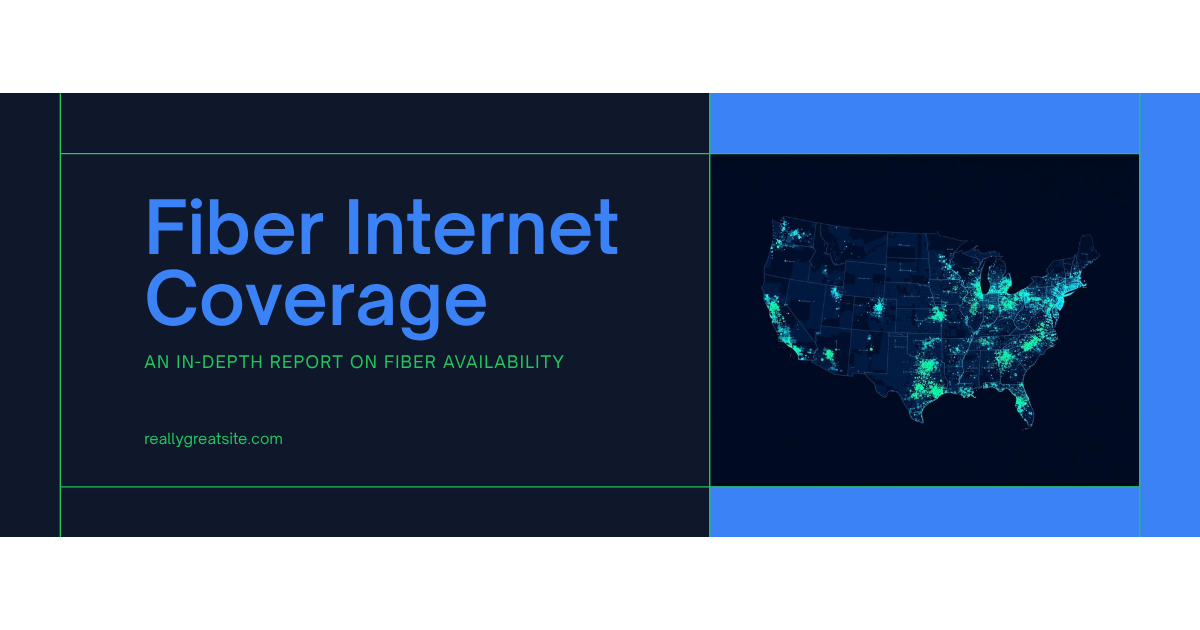
Fiber-to-the-home (FTTH) internet has reached a tipping point in the United States. According to our analysis of the latest government broadband availability filings, fiber is now available to over 60 million households nationwide, a number that continues to grow as ISPs large and small invest in next-generation infrastructure.
Key Findings
Our analysis of broadband filing data reveals several important trends in fiber deployment across the country.
The states leading in fiber availability include Utah, where multiple providers have built overlapping fiber networks, and Rhode Island, which benefits from its small geographic footprint and dense population. Texas has seen explosive growth from both incumbents and new entrants, while Virginia and North Carolina benefit from strong municipal and cooperative broadband programs.
Meanwhile, states with large rural areas like Montana, Wyoming, and Alaska continue to lag in fiber availability. However, federal BEAD funding is beginning to change this picture.
Check What's Available at Your Address
See which fiber, cable, and wireless providers serve your location — independent and 100% free for consumers.
Check My AddressThe Small ISP Factor
One of the most significant trends we have tracked is the growth of small, independent fiber providers. These companies, often electric cooperatives, municipal utilities, or startup ISPs, are responsible for bringing fiber to communities that large national carriers have historically overlooked.
Our data shows over 800 fiber providers currently filing availability data with federal regulators. Of these, roughly 600 are regional or local providers serving fewer than 100,000 locations each. Together, they serve millions of addresses that would otherwise rely on legacy DSL or satellite connections.
What This Means for Consumers
If you live in an area where fiber was not available a year or two ago, it is worth checking again. The broadband landscape is changing rapidly, and new providers are entering markets every quarter.
Use FiberFinder to check your address and see every provider available to you, including the local ISPs that big comparison sites often miss.
Methodology
This analysis is based on government broadband availability filings, which require ISPs to report availability at the address level. We process these filings to identify fiber deployments (technology codes 50 for FTTH and 70 for FTTP) and aggregate results by state and provider.